



Fight Crime members deliver new research brief & important message to policymakers
Law enforcement leaders are all too familiar with the consequences of failing to set children up to succeed. They know from experience that the path to public safety is paved long before any crime occurs.
That experience is borne out by decades of research on the effects of early care and education, detailed in the new Fight Crime: Invest in Kids Illinois research brief A Path to Success & Protecting Public Safety. The overwhelming evidence demonstrates that no conversation about crime and public safety is complete without attention to programs and strategies that bolster early childhood development.
Early care and education programs, from birth through preschool, can significantly alter outcomes for children, families, and communities. Research shows that participation has lasting effects and leads to better academic performance, less need for special education, and higher high school graduation rates.
The benefits aren’t just academic

These programs also improve behavioral outcomes. Children enrolled in Alabama’s preK program were about half as likely to have a behavioral infraction in school as those who did not receive preK, with the gap widening further in middle and high school.
The effects extend to reduced involvement with the criminal justice system:
- In the renowned Perry Preschool Program, children who attended a high-quality preschool were 35 percent less likely to be chronic offenders by age 27, compared to peers who did not attend.
- In an evaluation of Chicago’s Child-Parent Centers (CPC) program, those who attended were 40 percent less likely to be arrested for a violent crime by age 18, and were less likely to have served time in jail or prison by age 24.
- A long-term study of 55 high-poverty counties in North Carolina found that after Head Start was launched, later rates of criminal convictions decreased by 20 percent.
- A Boston preschool study found that former enrollees were less likely to have been incarcerated in a juvenile facility during high school.
Less crime also means reduced incarceration costs, which is among the factors that make these investments fiscally smart. The Chicago CPC program returned nearly $11 in societal benefits for every dollar spent, much of it in crime-related savings. An economic analysis of Head Start found it returns a net benefit of $17,262 per participant, 31 percent of which is due to reduced crime.
Illinois leaders can put research into action
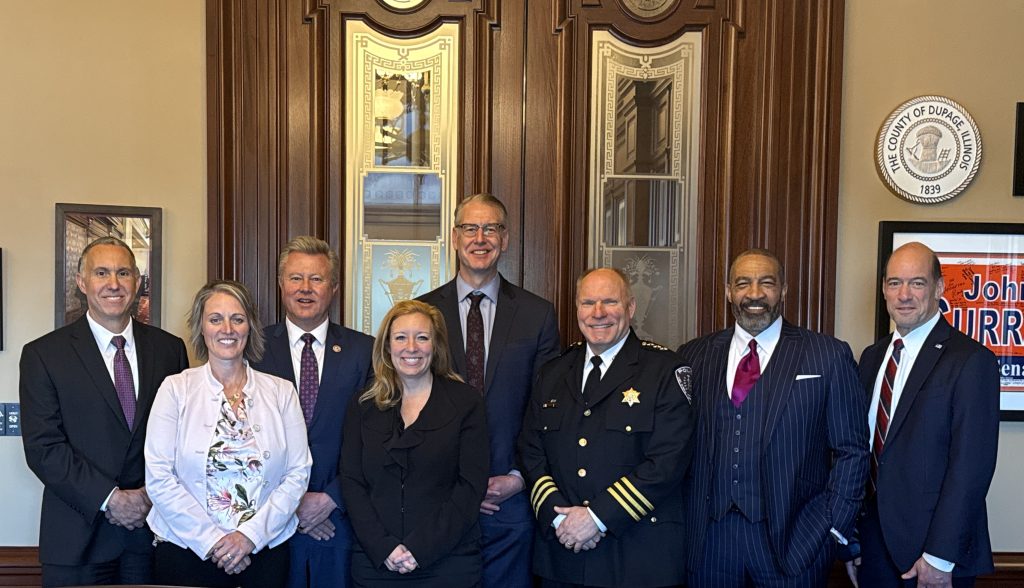
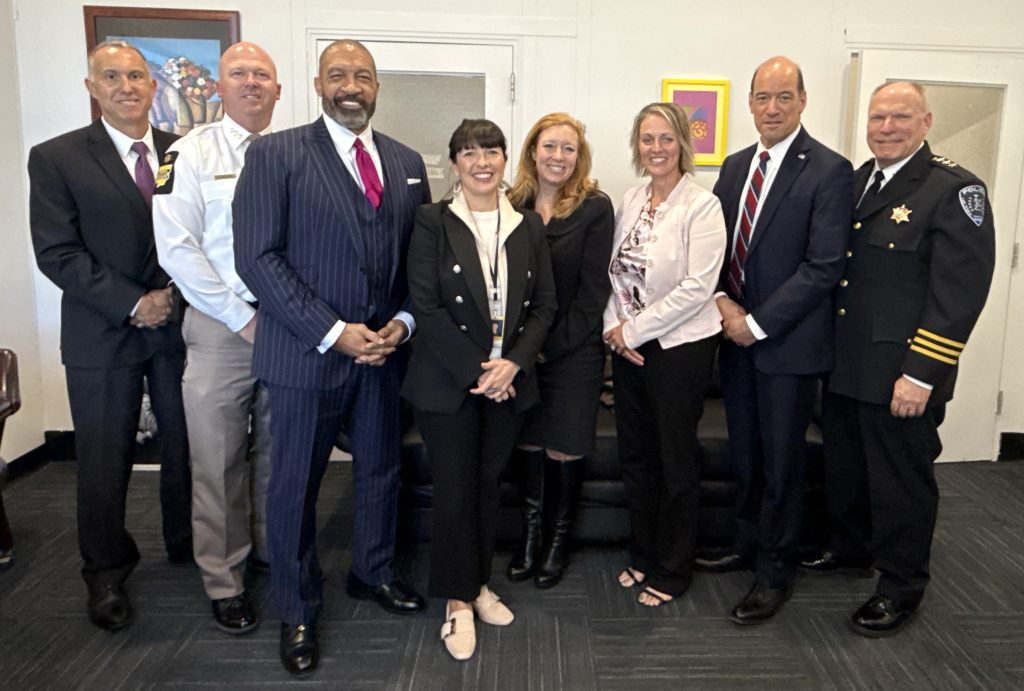
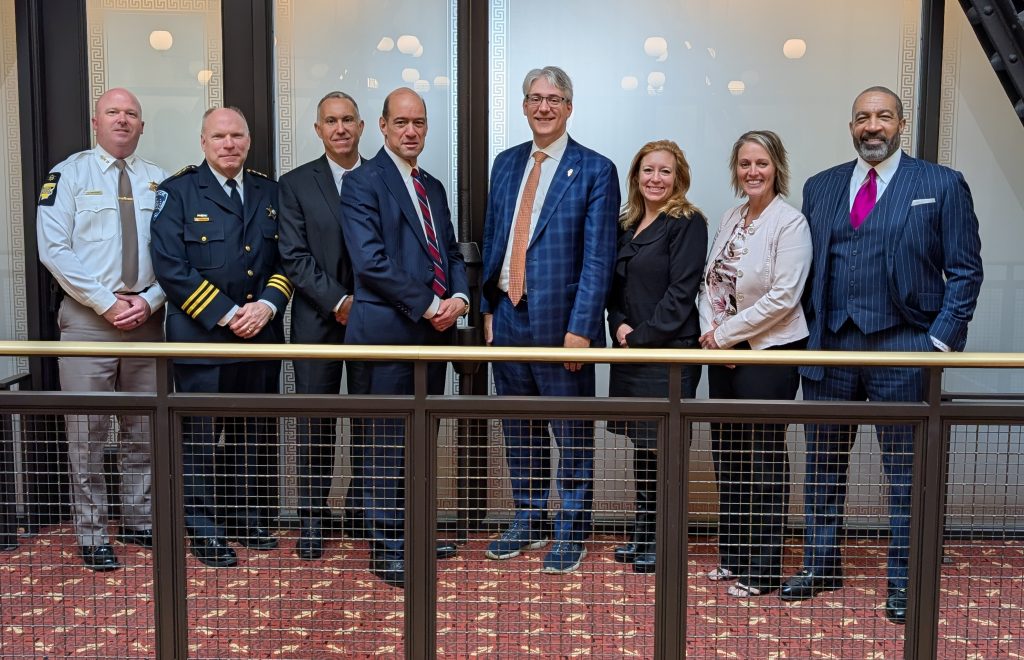
Such findings are why, on May 6, a group of state’s attorneys, police chiefs, and sheriffs — representing the nearly 400 Illinois law enforcement executives who are members of Fight Crime: Invest in Kids — traveled to Springfield to make sure lawmakers hear this message as they shape the FY27 budget.
The group included Peoria County Sheriff Chris Watkins, Urbana Police Chief Larry Boone, Kendall County State’s Attorney Eric Weis, DuPage County State’s Attorney Bob Berlin, Lake Zurich Police Chief Steve Husak, Peoria County State’s Attorney Jodi Hoos, and Kane County State’s Attorney Jamie Mosser.
Each delivered the new research brief and the same message: Fighting crime starts with investments in early learning. The group urged lawmakers to protect and strengthen funding for the Child Care Assistance Program, Early Intervention services, the Early Childhood Block Grant, Smart Start Workforce Grants, and ECACE scholarships.
They met with Senate President Don Harmon, House Majority Leader Robyn Gabel, House Assistant Majority Leader Eva-Dina Delgado, House Minority Leader Tony McCombie and Rep. Patrick Windhorst, Senate Minority Leader John Curran and Sen. Seth Lewis, and Sen. Mike Halpin.
Thriving, safe communities and better outcomes for children are within reach. Read the full research brief, and follow us on Facebook for updates.
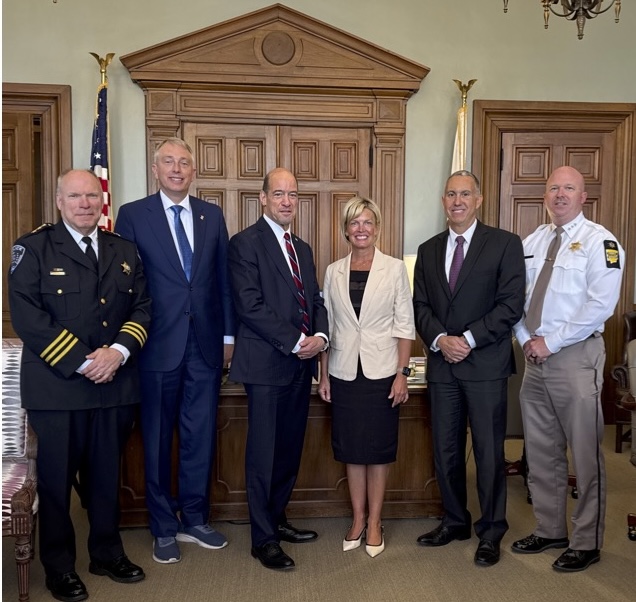
Pictured at the top: Law enforcement leaders met with House Majority Leader Robyn Gabel to review the latest research connecting early childhood development to public safety.